
Operations
Leak detection and automatic water shut-off: the cheapest insurance a building can buy?
Water damage tops Canadian home insurance claims and condo deductibles keep climbing. How leak sensors and shut-off valves work, and what the data shows.
A burst supply line on the 22nd floor doesn't stay on the 22nd floor. By the time someone notices water coming through a ceiling, it has often reached several units below, the corridor and sometimes the electrical room. For condo corporations, that path leads straight to the insurance deductible, and deductibles are now big enough to change how boards think about prevention.
Why water is the claim boards should worry about
Water damage has long been at the top of Canadian home insurance claims. The Insurance Bureau of Canada's consumer guide on water damage says it tops the list of home insurance claims, accounts for nearly half the amount paid on home claims in Quebec, and costs the industry more than a billion dollars a year. That guide dates from 2017, and the trend since has gone the wrong way. In May 2026, the IBC said flood and water-related insured losses over the last 20 years were more than 350% higher than in the two decades before, citing Catastrophe Indices and Quantification Inc.
Not all of that is preventable from inside a building. Overland flooding and storm surge are a different problem. But the everyday sources, such as failed dishwasher hoses, cracked toilet supply lines, leaking water heaters and frozen pipes, are exactly what detection and shut-off systems are designed for.
How the deductible lands on owners
In Ontario, the Condominium Act lets a corporation charge an owner the lesser of the repair cost or the corporation's insurance deductible when the owner, through an act or omission, damages their own unit. With a by-law, the corporation can extend that to damage spreading to the common elements and other units, as long as the corporation didn't cause it. Toronto condo lawyers at Gardiner Miller Arnold lay out how this works with a $100,000 deductible example, and note they commonly see owners carrying only about $25,000 of deductible coverage on their own policies.
Alberta lets a corporation recover up to $50,000 of its deductible from the owner of the unit where the damage started, without proving negligence. StrataReports, which analysed more than 150 Alberta condo budgets and insurance certificates, found that the median water-damage deductible on Alberta policies is $50,000, and about one policy in twenty carries $100,000 or more.
Individual owners feel it too. Rates.ca found that a single water damage claim raises an Ontario homeowner's premium by an average of 19%, or $376 a year.
When a single leak can mean a five- or six-figure bill for one owner and a claims history for the whole building, prevention stops being a nice-to-have.
How the systems work
There are three layers, and most good installations use more than one.
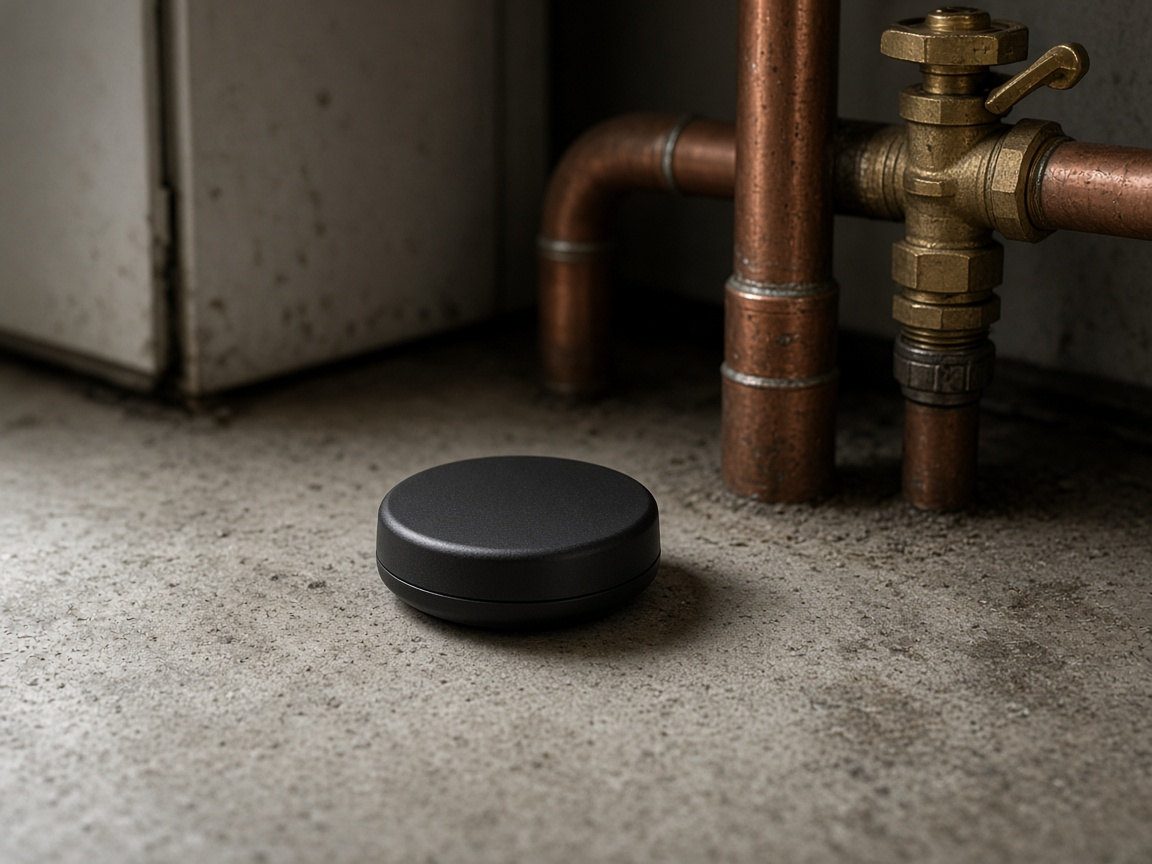
Spot sensors. Small battery or wired sensors under sinks, behind toilets, beside washing machines and water heaters, and in mechanical rooms. They detect water on the floor and raise an alarm. They're cheap and easy to deploy, but they only catch water where they've been placed, and only after it has escaped.
Automatic shut-off valves. A motorized valve on the suite's (or riser's) water supply that closes when a sensor trips or when it detects abnormal flow. This is the step that turns a ceiling-collapse event into a wet towel. In-suite valves need a plumber and access to the supply line, so retrofits are easiest during a renovation or a planned plumbing project.
Flow monitoring. Meters or sensors that learn normal water use and flag continuous flow, such as a running toilet or a pinhole leak inside a wall, before water shows up anywhere. Flow data also supports suite-level submetering, where local rules allow it.
What the evidence says
The best data so far comes from insurers and analytics firms, mostly on single-family homes, so treat the numbers as indicative rather than condo-specific.
- A LexisNexis Risk Solutions claims study of 2,306 U.S. homes with an in-line smart shut-off valve found a 96% drop in water claim events and a 72% drop in claim severity in the year after installation. Over the same period, a comparison group without devices saw claims rise 10%. The study looked at a single manufacturer's device.
- A 2026 carrier-backed study of about 2,200 insured properties with smart water monitoring and automatic shut-off found an 81% drop in claim frequency and an 85% drop in severity after installation, and 30% fewer claims than the general insured population.
Those are large effects. The honest caveats: homeowners who buy these devices may already be more careful, the studies cover houses rather than high-rises, and vendors have an obvious interest in the results. Even so, the direction is consistent.
Why the system behind the sensors matters
A leak sensor that beeps inside an empty suite while the owner is in Florida protects nobody. The value comes from what happens in the next five minutes.
Alerts need to reach someone who can act. That usually means the concierge desk or the superintendent, not just the owner's phone. The alert should say which suite, which sensor and whether the valve has closed.
It has to keep working when the internet doesn't. If sensors report only to a vendor's cloud, an internet outage, which can come with the same storm that causes the leak, can mean no alarm and no shut-off. Systems that make the shut-off decision locally, with an on-site controller or server, and use the cloud for remote alerts and reporting, fail more gracefully.
It works best inside the building's main system. When leak detection shares a platform and database with access control and alarms, a leak alert can come with the suite's resident contacts, show staff which fob opens the riser room, and appear in the same event log as everything else. A standalone water app adds one more login, one more vendor contract and one more resident list to keep current. A good standalone product beats no detection at all, but integration pays off when staff are reacting under pressure.
Someone has to own maintenance. Batteries die, valves seize if they're never exercised, and sensors get moved when a renter rearranges a laundry closet. Build testing into the preventive maintenance schedule and the reserve fund study.
What this means for your building
- Start with your claims history. Ask your insurance broker for five years of losses by cause. If water dominates, which it usually does, you have your business case.
- Protect the risers and mechanical spaces first. Common-element sensors and shut-offs at the riser level are under the corporation's control and protect the most units per dollar.
- Then go suite by suite. Look at a by-law or rule that requires in-suite sensors (and ideally shut-off valves) at renovation or resale, alongside owner education about the deductible.
- Talk to your insurer before you buy. Ask what devices or monitoring they recognize, and whether premium, deductible or renewal terms change if you install them.
- Tell owners what their deductible exposure is. Many don't know their own policy covers far less than the corporation's deductible.
Questions to ask your vendor
- What happens when a sensor trips: who is alerted, through which channels, and how fast?
- Does the shut-off decision happen locally, or does it need the internet and your cloud?
- Can it integrate with our access control and alarm system so leaks appear in one event log with suite and resident details?
- How are batteries, valve exercising and sensor tests tracked, and who is responsible?
- Can you provide claims or loss data from installations in multi-unit residential buildings, not just houses?
- What are the per-suite installed cost and the annual monitoring fee, and what happens to the hardware if we change providers?
Water will always find the lowest point in a building. The point of detection and shut-off is to make sure it doesn't find the reserve fund first.