
Operations
When your building vendor is sold out of receivership: the SmartONE to NaviComm sale
Navien's parent bought SmartONE's business out of an Ontario receivership and launched NaviComm. Buildings on that stack should get the transition, the contract and the data in writing.
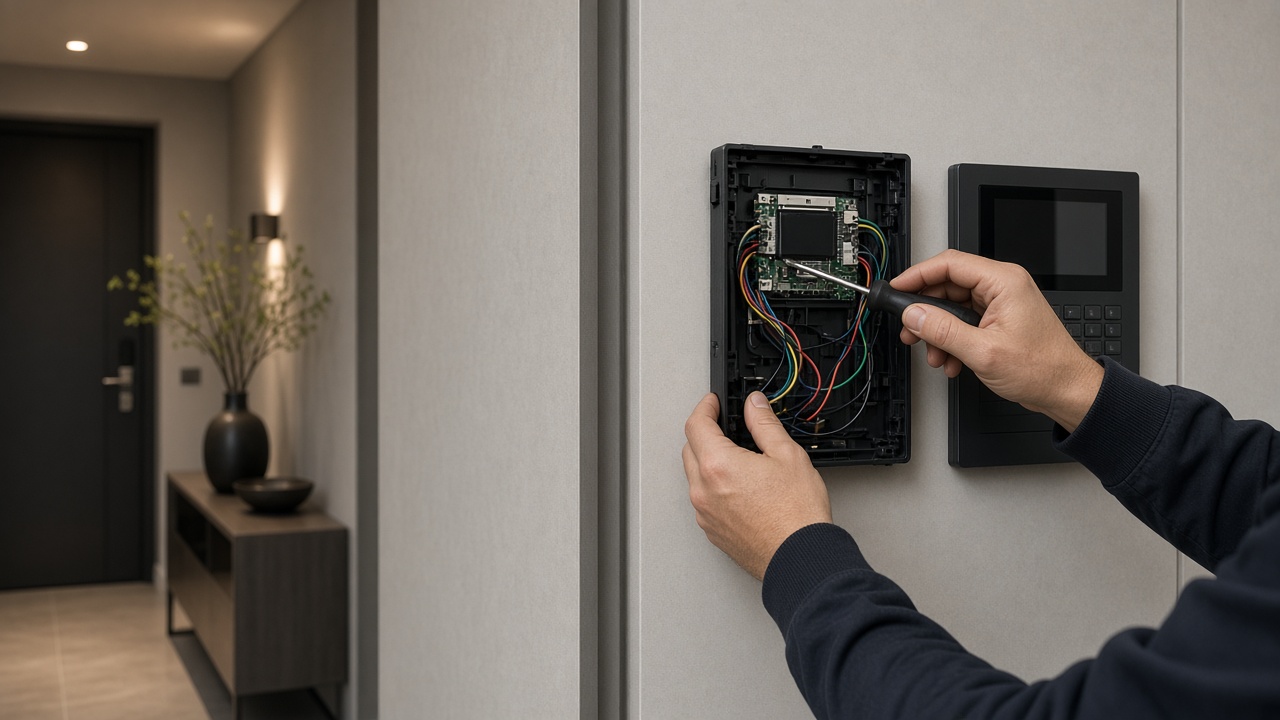
On 20 October 2026, KD Group, the parent of the water-heater and HVAC manufacturer Navien, announced that it had acquired the core business and assets of SmartONE Solutions and established a new Ontario company, NaviComm, to continue the work. In the announcement, Navien described an integrated platform for multi-unit housing: in-suite wall pads, lobby intercoms and visitor management, access control, a resident app, and ongoing support.
For boards and managers whose buildings already run that stack, the press release is not the whole story. It is the public ending of a court-supervised sale.
What the court record says
PricewaterhouseCoopers, the court-appointed receiver, maintains a public file for the company now named 2543797 Ontario Inc., formerly SmartONE Solutions Inc.. According to that file, the Ontario Superior Court of Justice appointed PwC as receiver and manager on 11 December 2025, on an application by Bell Canada, under the Bankruptcy and Insolvency Act.
A court-approved sale process followed in 2026. On 17 September the Court issued an approval and vesting order for a sale transaction contemplated by an agreement of purchase and sale between the receiver and Navien Canada Inc. dated 21 August 2026. PwC reports that the sale closed on 25 September 2026, after which the name SmartONE Solutions Inc. was removed from the receivership proceeding and replaced with the numbered company. Navien's 20 October announcement is the buyer's public description of that closed transaction.
Those dates, parties and court steps are a matter of record. What a given building's contract says about assignment, warranties and data is a separate question, and only the corporation's own agreement and counsel can answer it.
Why this is bigger than one brand
A receivership is a stressful event for a building because the product in the wall is only half of what was purchased. The other half is someone who will issue a credential, patch a server, answer a failed intercom, and produce a video clip when the board needs it. When that company is in court, those obligations can change hands, shrink, or become unclear.
A going-concern sale to a buyer that intends to operate the business, which is how Navien has described NaviComm, is often the better outcome for customers. Continuity is still something to verify, not assume. The legal entity on the invoice may have changed. Support staff may have changed. The application residents use may be rebranded, moved, or rebuilt. Data — resident lists, access logs, video, in-suite settings — may have moved from one operator to another.
None of that means the new owner will do a poor job. It means a board should get the transition in writing.
Questions for buildings that had SmartONE, and for everyone else
If your corporation was a SmartONE customer, ask NaviComm or the dealer who services you, in writing:
- Who is the contracting party now, and has the existing service agreement been assigned or replaced?
- Will installed intercoms, access hardware and in-suite devices remain supported, and for how long?
- Where is resident and video data stored, who controls it, and how can the corporation export it?
- What, if anything, is changing in the resident app, including login, availability and privacy terms?
- Who answers after-hours failures, and on what response time, during the transition?
If you are writing a new building-technology contract, the same file is a case study in the clauses we flagged in our questions to ask before you sign: assignment, insolvency, data export, and a service obligation that does not vanish if the logo on the panel changes.
Navien's stated rationale is to extend its plumbing and HVAC business into a broader "connected residential" offering. That kind of combination can be coherent for a building that wants comfort systems and access under one roof. It can also create new integration and data questions. Those are fair to ask a well-capitalized buyer. They were also fair to ask before the sale.
Buildings that were mid-install, or that had a prepaid service term, should also ask how deposits, unfinished work and unused prepaid months are being treated. Those details belong in a letter from the new operator or the receiver, not in a hallway conversation with a technician.
Vendor failure is rare until it is not. The useful habit is to treat solvency, assignment and data-return as part of the specification, right next to the reader on the wall.